What Is Mushroom Substrate?
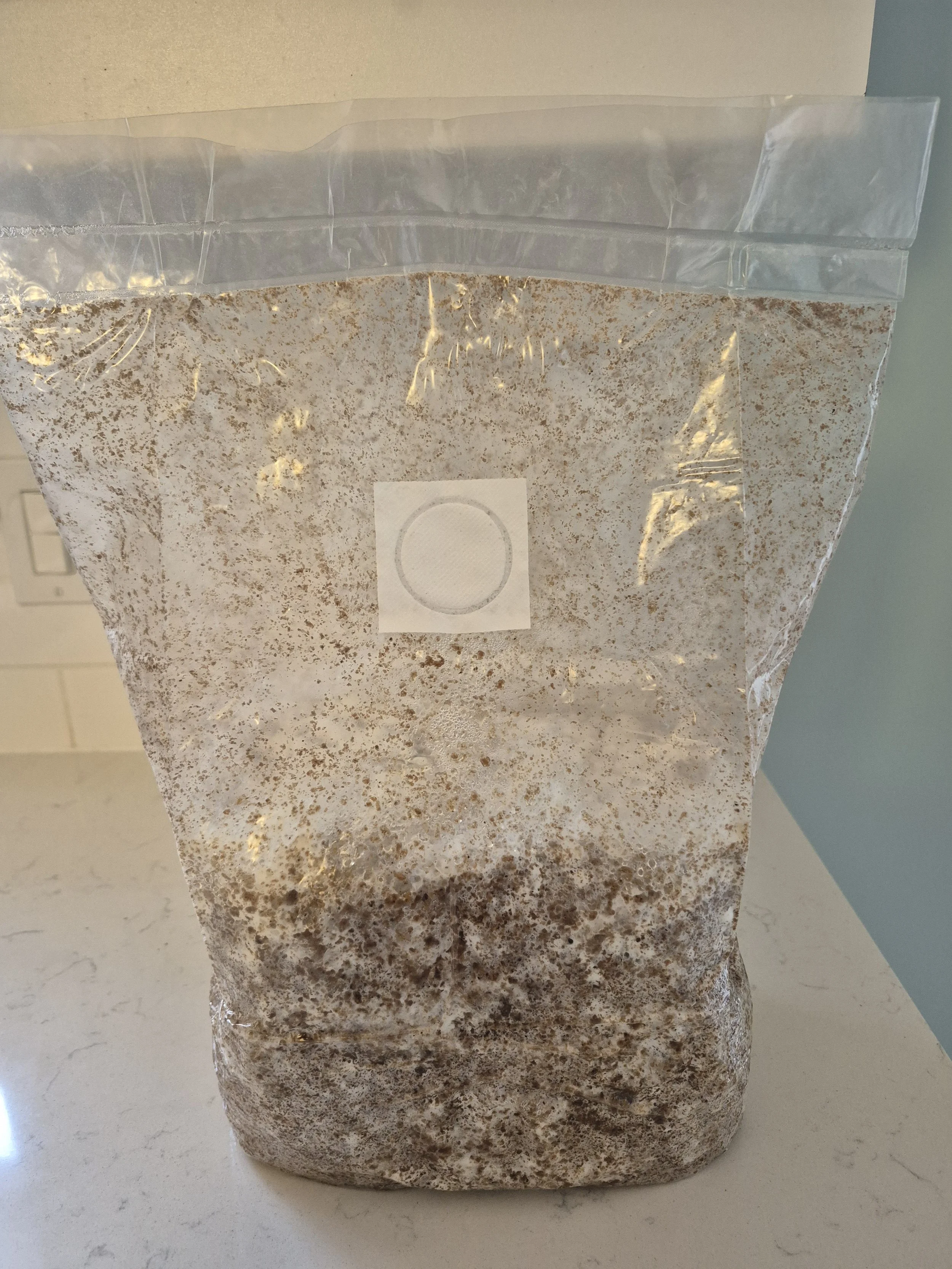
Lion's mane mushroom substrate bag fully colonized and ready for fruiting.
Mushroom substrate is the material that mushroom mycelium grows through and eventually uses to produce mushrooms. Think of substrate as the food source for your mushroom grow.
Different mushroom species prefer different substrates, but the goal is always the same: provide the mycelium with a nutritious environment where it can grow, colonize, and fruit.
Why Is Substrate Important?
Once grain spawn has been fully colonized, it is typically mixed with a larger amount of substrate. The grain spawn acts as the "seed," while the substrate provides the bulk food source needed to grow mushrooms.
Without substrate, most cultivated mushrooms would have very limited room and nutrients available for producing a worthwhile harvest.
Common Types of Mushroom Substrate
Many different materials can be used as mushroom substrate, including:
Hardwood sawdust or hardwood pellets
Straw
Soybean hulls
Agricultural waste products
Coco coir and vermiculite (for some species)
The best substrate depends on the mushroom species being grown. Many gourmet mushrooms are commonly grown on hardwood-based substrates, while others may perform better on straw, agricultural by-products, or other materials. Choosing the right substrate helps provide the nutrition and growing conditions that each species prefers.
Supplemented Substrates
Many gourmet mushroom growers add nutrient-rich ingredients to their substrates to support faster mycelial growth and larger harvests.
Common supplements include:
Soybean hulls
Wheat bran
These ingredients increase the nutritional value of the substrate, but they also increase the risk of contamination if proper sterilization procedures are not followed.
Grain Spawn vs. Substrate
A common beginner question is the difference between grain spawn and substrate.
Grain spawn is used to expand mushroom mycelium quickly and evenly. Substrate is the larger food source that supports mushroom production.
In most cultivation methods, fully colonized grain spawn is mixed into a sterilized or pasteurized substrate. The mycelium then spreads through the substrate before producing mushrooms.
Conclusion
Mushroom substrate is one of the most important parts of the cultivation process. Choosing the right substrate helps provide the moisture, structure, and nutrition needed for healthy mushroom growth.
Once you understand what substrate is, the next step is learning about specific substrate recipes and why many gourmet mushroom growers use a mixture known as Master's Mix.