What Is a Mushroom Fruiting Block?
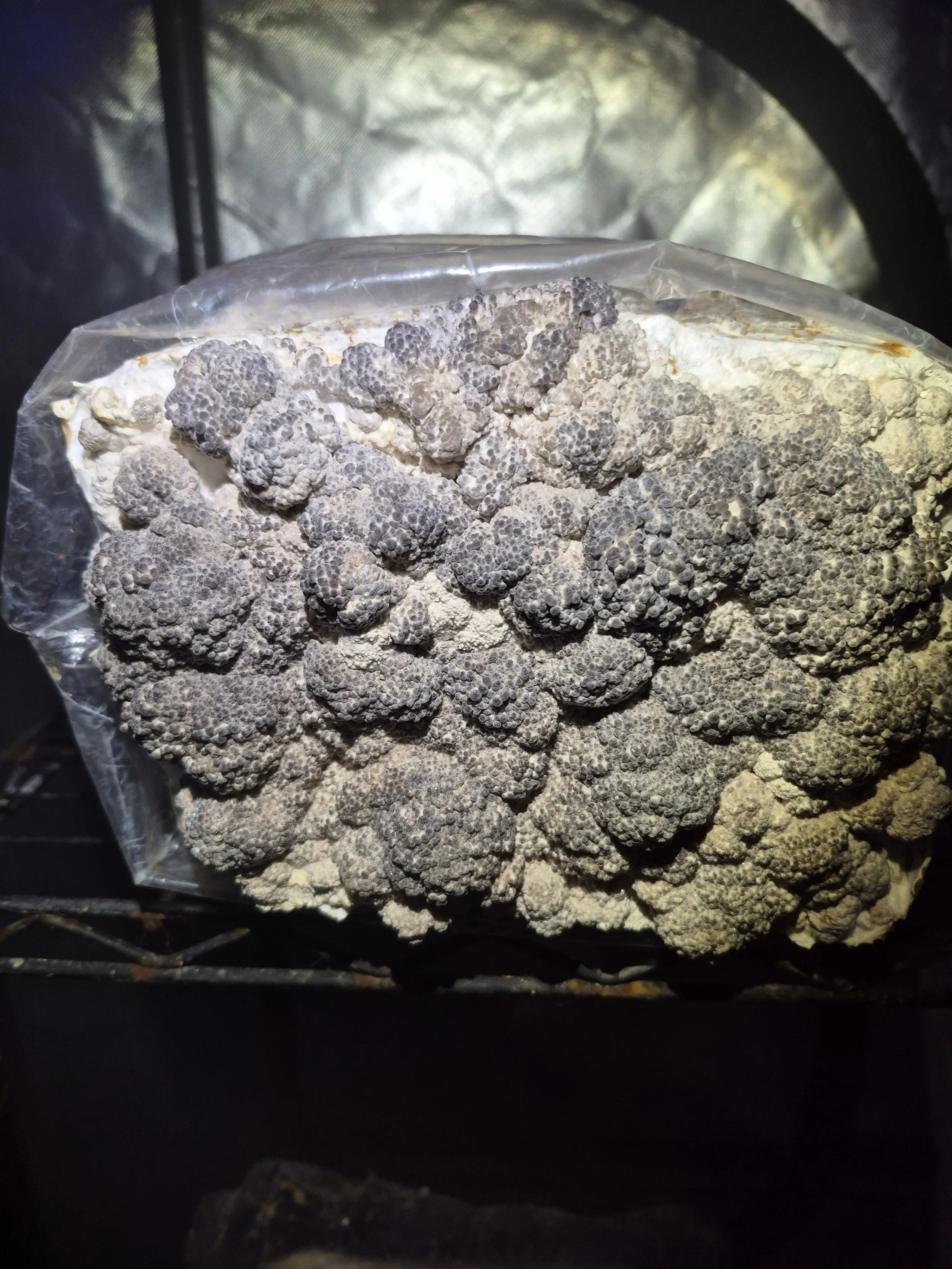
A mushroom fruiting block is a fully colonized block of substrate that is ready to produce mushrooms. Once mushroom mycelium has completely colonized a substrate, the block can be placed into fruiting conditions where it will begin developing mushrooms.
Mushroom fruiting blocks are commonly used by hobby growers, commercial mushroom farms, and mushroom grow kit companies because they provide a convenient way to grow mushrooms without preparing grain spawn or substrate from scratch.
In this article, we'll explain what a mushroom fruiting block is, how it's made, and what happens during the fruiting process.
How Is a Fruiting Block Made?
The process begins with a mushroom culture, often in the form of liquid culture or mycelium growing on an agar plate. This living mushroom culture is used to inoculate sterilized grain, creating grain spawn.
Once the grain spawn has fully colonized, it is mixed with a sterilized substrate such as Master's Mix or another suitable mushroom substrate. The grain spawn acts as an inoculation source, allowing the mushroom mycelium to spread quickly throughout the substrate.
Over time, the mycelium continues to grow and consume the available nutrients within the substrate. As colonization progresses, the substrate becomes increasingly white as it is covered by mushroom mycelium.
When the substrate has been fully colonized, it becomes a mushroom fruiting block.
What Is Inside a Fruiting Block?
A fruiting block contains two primary components: substrate and mushroom mycelium.
The substrate serves as the food source for the mushroom. Depending on the species being cultivated, substrates may contain ingredients such as hardwood pellets, hardwood sawdust, soybean hulls, straw, coco coir, or other organic materials suitable for mushroom cultivation.
The mycelium grows throughout the substrate, breaking down and utilizing the available nutrients. As the mycelium expands, it binds the substrate together into a solid block.
How Does a Fruiting Block Produce Mushrooms?
Once a fruiting block has fully colonized, it is introduced to fruiting conditions. Depending on the mushroom species being grown, this often involves cutting a slit, flap, or X-shaped opening in the grow bag to expose part of the colonized block to fresh air.
Fresh air, humidity, light, and suitable temperatures signal to the mycelium that it is time to begin producing mushrooms. In response, the mycelium forms small knots of tissue known as primordia, which are the earliest stage of mushroom development.
As the primordia continue to develop, they become mushroom pins and eventually mature into fully formed mushrooms.
Depending on the species and growing conditions, mushrooms may be ready to harvest within a week or more after pin formation begins. Some species grow rapidly, while others may take longer to mature.
Conclusion
A mushroom fruiting block is a fully colonized block of substrate that is ready to produce mushrooms. Created by introducing grain spawn to a suitable substrate and allowing the mycelium to colonize completely, fruiting blocks are a key part of modern mushroom cultivation.
Once exposed to proper fruiting conditions, the block can develop primordia, form mushroom pins, and eventually produce mature mushrooms. Whether used by hobby growers or commercial farms, fruiting blocks provide a simple and effective way to grow a wide variety of gourmet and medicinal mushrooms.