Lion’s Mane
The Mushroom That Grows Like No Other
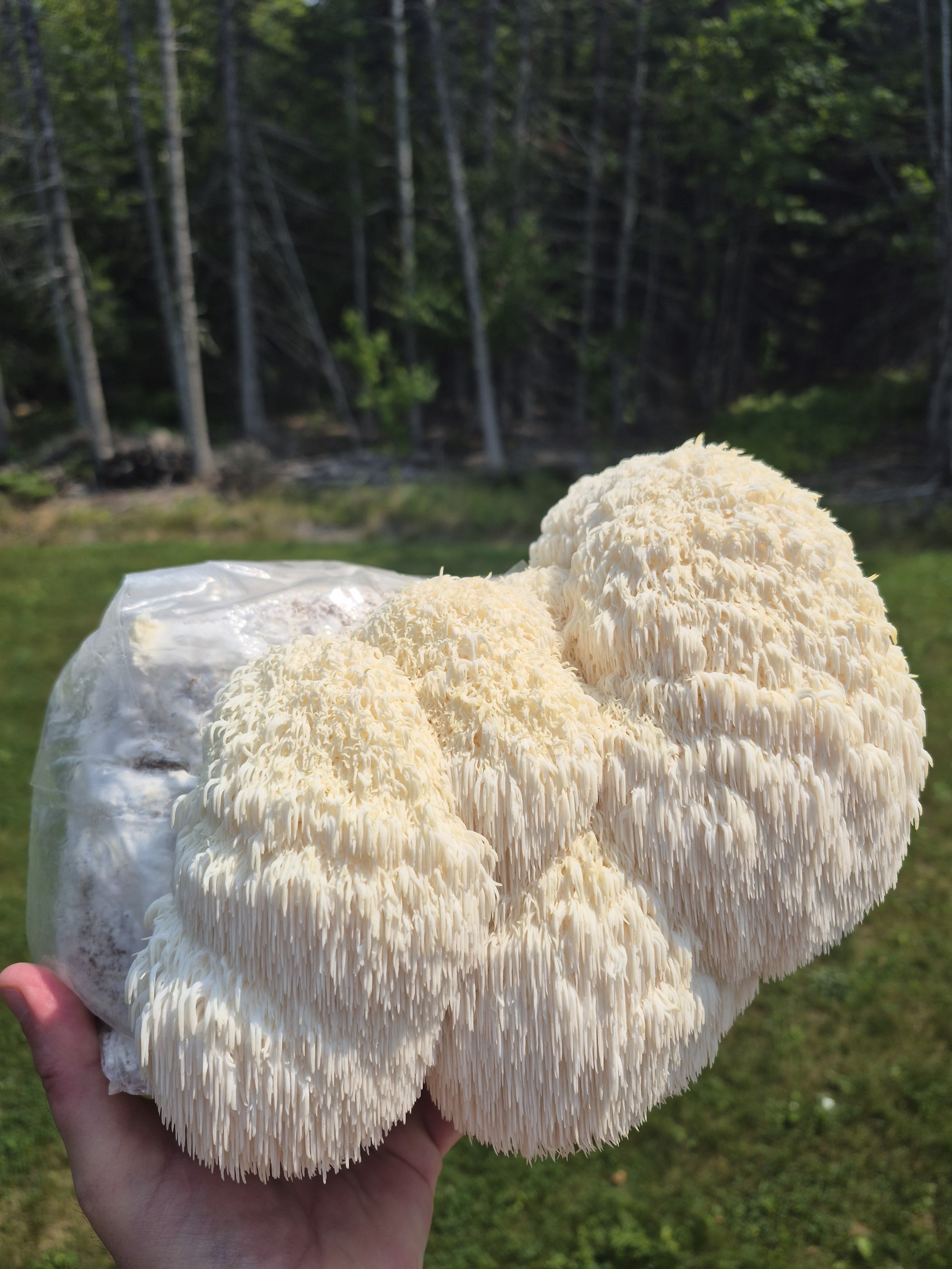
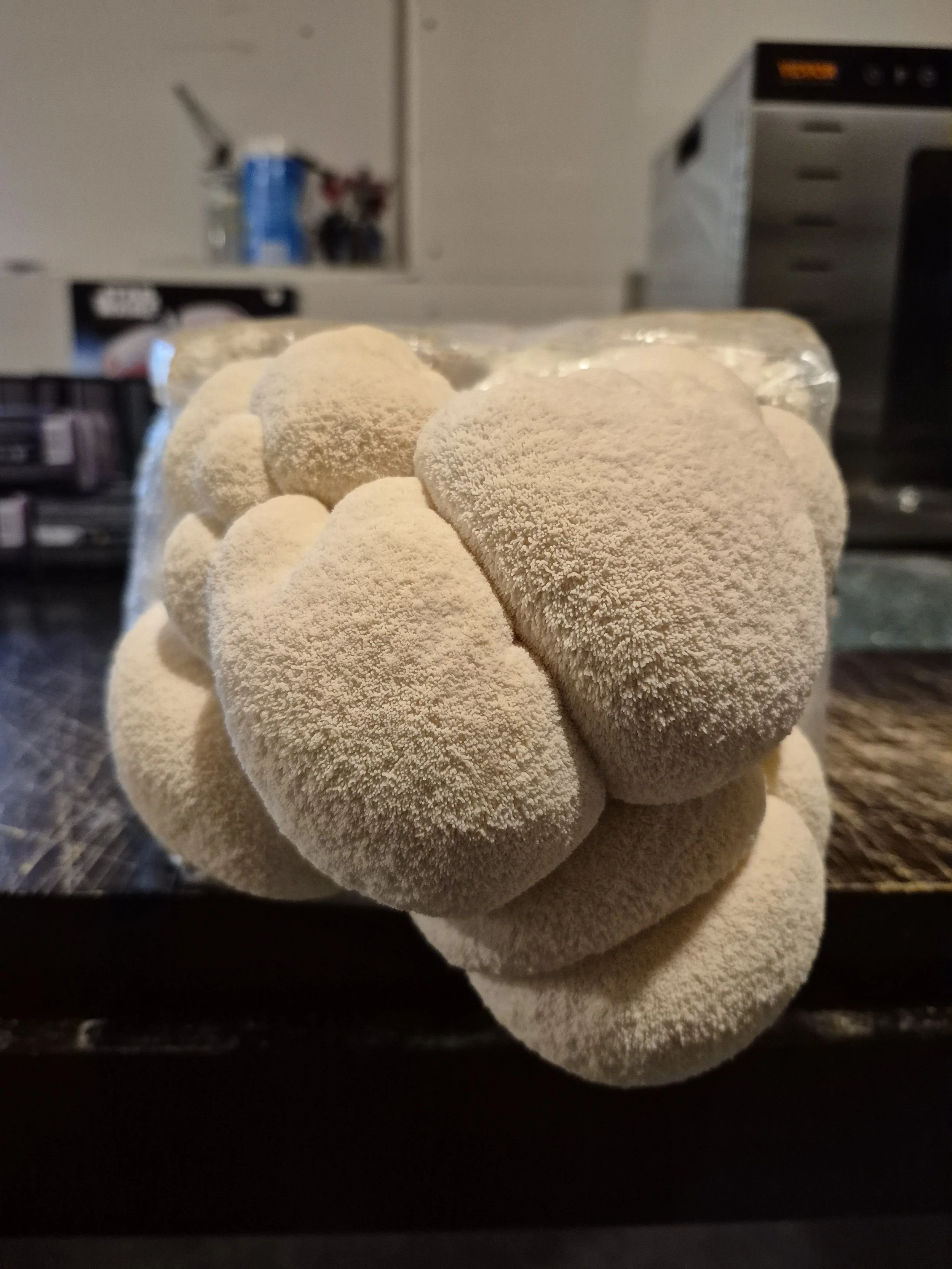
Lion’s Mane (Hericium erinaceus) is one of the most distinctive gourmet mushrooms in the world. Instead of forming the familiar cap and stem, it develops cascading clusters of soft, tooth-like spines that give the mushroom its unmistakable appearance. Native to hardwood forests across parts of North America, Europe, and Asia, Lion’s Mane can be found growing naturally on living or fallen hardwood trees. Its unusual form, delicate texture, mild flavour, and fascinating growth habit have made it a favourite among mushroom growers, chefs, and researchers alike.
More Teeth Than Cap
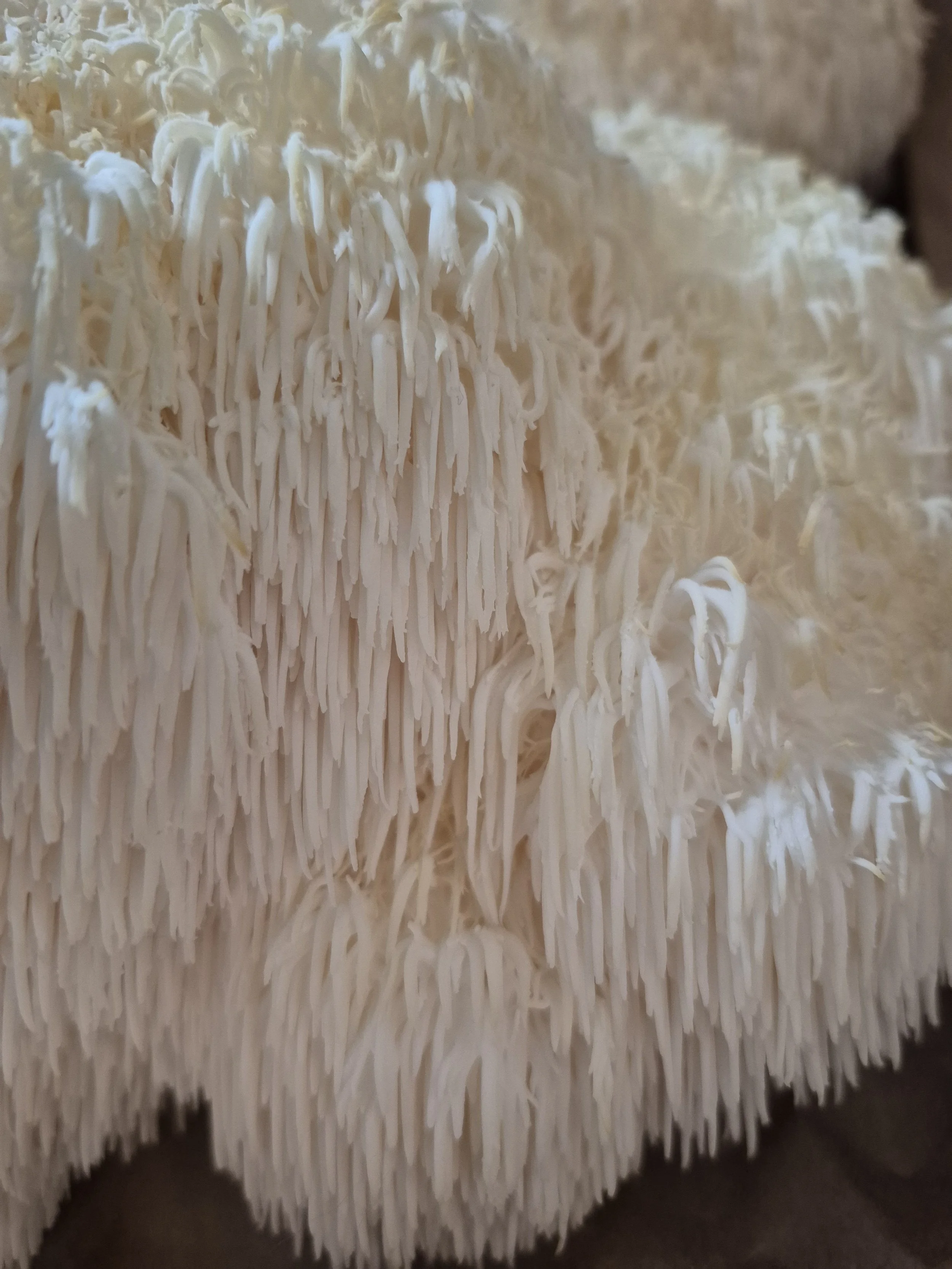
Unlike most familiar mushrooms, Lion’s Mane does not produce a traditional cap with gills underneath. Its fruiting body develops thousands of slender, downward-hanging spines, often called teeth. These teeth are where the mushroom produces and releases its spores. As Lion’s Mane matures, the teeth become longer and more pronounced, creating the shaggy, cascading appearance that gives the mushroom its name. Young fruiting bodies are typically white to cream coloured and can gradually develop yellowish or brownish tones as they age.
Built For the Forest
Lion’s Mane is a wood-loving fungus, naturally associated with hardwood trees and woody material. Rather than drawing nutrients from soil, its mycelium grows through wood and breaks down its complex structure as a source of nutrition. That same preference is carried into cultivation, where Lion’s Mane is commonly grown on hardwood-based substrates such as supplemented sawdust. Once the substrate is colonized and conditions are right, the fungus shifts from hidden mycelial growth to producing the distinctive fruiting body we recognize as Lion’s Mane.
A Mushroom With a Long History
Lion’s Mane has been valued in East Asia for centuries, particularly in China, Japan and Korea, where it has been used both as food and in traditional practices. In China it is known as Hóu Tóu Gū, or “monkey head mushroom,” while in Japan it is called Yamabushitake. Its distinctive appearance and culinary qualities helped give Lion’s Mane a place in traditional cuisine long before modern cultivation made it more widely available. Today, it has attracted renewed attention from chefs, mushroom growers and researchers around the world.
From Forest to Frying Pan
Lion’s Mane is prized not only for its unusual appearance but also for its texture and flavour. When cooked, its dense, tender flesh can develop a slightly sweet, savoury character that is often compared to crab or lobster. The mushroom readily absorbs butter, oils, marinades and seasonings, while its fibrous structure holds together remarkably well during cooking. It can be sautéed or pan-seared until golden, pulled apart for seafood-style dishes, or even pressed into thick portions, marinated and seared to create a hearty mushroom “steak.” Its versatility makes Lion’s Mane equally at home in simple butter-and-garlic preparations, pasta and sandwiches, or as the centrepiece of a meal.
Why Researchers Are Interested
Lion’s Mane contains a variety of naturally occurring compounds that have attracted scientific interest, including groups known as hericenones and erinacines. Researchers have investigated these compounds and Lion’s Mane extracts for their potential effects on the nervous system, cognition and other areas of human health. While laboratory, animal and some human studies have produced interesting findings, research is still developing and Lion’s Mane should not be viewed as a treatment or cure for any medical condition.