Why Are Mushrooms Important?
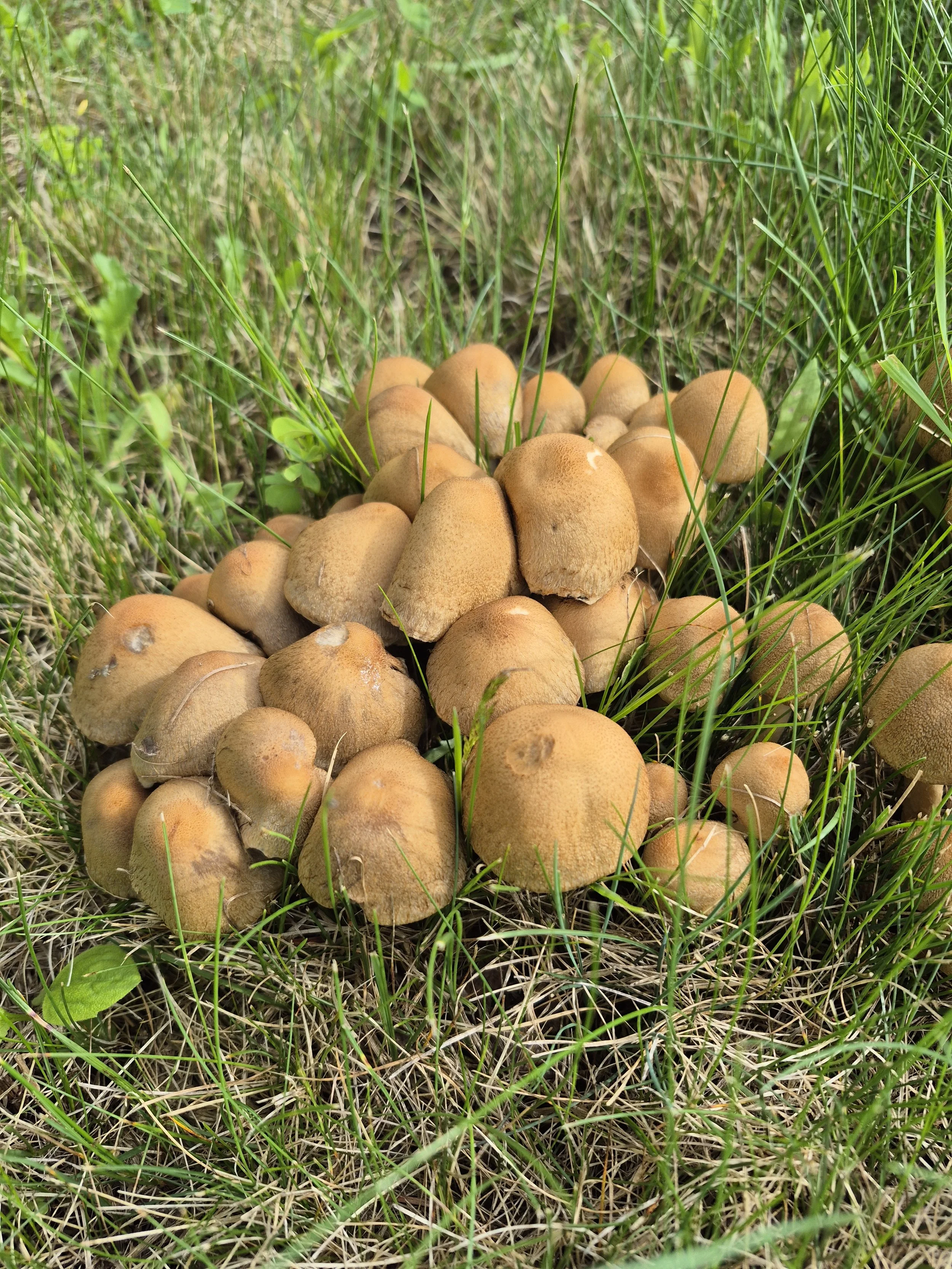
Mushrooms can seem like a small part of nature. They appear on the forest floor, grow from fallen trees, emerge after periods of rain, and sometimes disappear almost as quickly as they arrived. But mushrooms are only the visible part of a much larger story.
Fungi play important roles in forests, soils, and ecosystems around the world. They help break down dead organic matter, recycle nutrients, interact with plants and trees, provide food for wildlife, and contribute to healthy soil.
Much of this work happens quietly and out of sight.
The Mushroom Is Only Part of the Fungus
When we think of fungi, we usually picture mushrooms. But the mushroom itself is generally the fruiting body of a much larger fungal organism.
Fungi grow through tiny thread-like structures called hyphae. As these hyphae grow and branch, they collectively form mycelium.
Depending on the species, mycelium can grow through soil, wood, leaves, grain, and other organic material. Individual hyphae are extremely small, but established mycelium can often be clearly seen with the naked eye.
When environmental conditions are right, some fungi produce mushrooms. These fruiting bodies produce and release spores, allowing the fungus to reproduce and potentially establish itself elsewhere.
The mushroom may be the part we notice, but much of the organism's life takes place before that mushroom ever appears.
Mushrooms Are Nature's Recyclers
One of the most important jobs performed by many fungi is decomposition.
Forests continually produce dead organic material. Trees fall, branches break, leaves drop, and plants eventually die. The nutrients contained in all of that material don't simply disappear.
Many fungi are remarkably good at breaking down tough plant material. Wood-decay fungi can even break down components such as cellulose and lignin that are difficult for many other organisms to decompose.
As fungi break down dead organic matter, nutrients contained within that material are returned to the surrounding ecosystem, where they can become available to other organisms.
Without decomposers such as fungi, dead organic material would accumulate and the recycling of nutrients through ecosystems would be very different.
Fungi and Plants Can Work Together
Not all fungi obtain their nutrients by decomposing dead material.
Many fungi form close relationships with living plants and trees. One particularly important example is known as a mycorrhizal relationship.
In these partnerships, fungi associate with plant roots. The fungal network can help the plant obtain water and nutrients such as phosphorus and nitrogen from the surrounding soil. In return, the plant supplies the fungus with carbon compounds produced through photosynthesis.
These relationships are widespread in nature and can be important to the health and growth of plants.
A forest may look relatively quiet beneath our feet, but the soil contains an enormous amount of biological activity. Fungi are an important part of that hidden world.
Fungi Are Part of the Food Web
Fungi are also an important source of food for many living things.
Insects, slugs, small mammals, and other animals eat mushrooms and other fungal material. Some animals can also help disperse fungal spores as they move through their environment.
Because fungi are eaten by other organisms and interact with so many forms of life, they form an important part of many food webs.
A mushroom growing from an old log isn't simply an isolated organism. It is part of an ecosystem involving the wood it is growing from, microorganisms, plants, insects, animals, moisture, temperature, and the surrounding soil.
Fungi Contribute to Healthy Soil
Healthy soil is much more than dirt…
It contains minerals, organic matter, roots, microorganisms, fungi, water, air, and an extraordinary variety of living organisms.
Fungi contribute to these systems by breaking down organic material and participating in the cycling of nutrients. Their hyphae can also grow throughout soil and other substrates, creating extensive networks within their environment.
What happens below ground is easy to overlook because we rarely see it.
The mushroom that suddenly appears above the soil may only remain visible for a short period, while the fungus that produced it may have been growing and interacting with its environment long before the mushroom appeared.
Mushrooms Are Important to People
As us humans we have gathered wild mushrooms and cultivated edible species for a very long time.
Today, mushrooms such as oyster, shiitake, lion's mane, chestnut, pioppino, and maitake are cultivated for food around the world.
Cultivation also gives us an unusual opportunity to watch fungal growth that would normally remain hidden.
Mycelium can be grown on agar, expanded in liquid culture, introduced to grain, and eventually transferred to a suitable growing substrate. As colonization progresses, visible mycelium spreads through that material.
Under the right conditions, that fungal growth can eventually produce mushrooms.
For a cultivator, watching this process makes something very clear: the mushroom at the end is only one stage of a much longer biological process.
An Entire Kingdom Mostly Hidden From View!!
Perhaps one of the most fascinating things about fungi is just how much of their lives take place where we cannot easily see them.
We notice a cluster of mushrooms growing from a tree.
We notice oyster mushrooms emerging from a fallen log.
We notice mushrooms suddenly appearing across the forest floor after favourable weather.
What we don't normally see is everything that happened beforehand.
Mycelium may already have been growing through wood, soil, or other organic material — obtaining nutrients, interacting with its environment, and continuing the life cycle of the fungus.
That's why mushrooms are much more than interesting things that appear in forests or something we grow for food.
Fungi help decompose organic material. They recycle nutrients. Some form important relationships with plants. They participate in food webs. They contribute to soil ecosystems. And they produce an extraordinary variety of mushrooms.
The mushroom is what catches our attention.
The fungus is the bigger story.
Fun Fact
One famous Armillaria fungus in Oregon has an enormous underground network of mycelium that covers about 2,385 acres, making it one of the largest known individual organisms on Earth.
Conclusion
Mushrooms may be the part of fungi that we notice most, but their importance goes far beyond what we see above ground. From recycling nutrients and supporting plant life to providing food for other organisms, fungi are an essential part of the natural world. The more we learn about them, the more remarkable this mostly hidden kingdom becomes.