What Is a Flush?
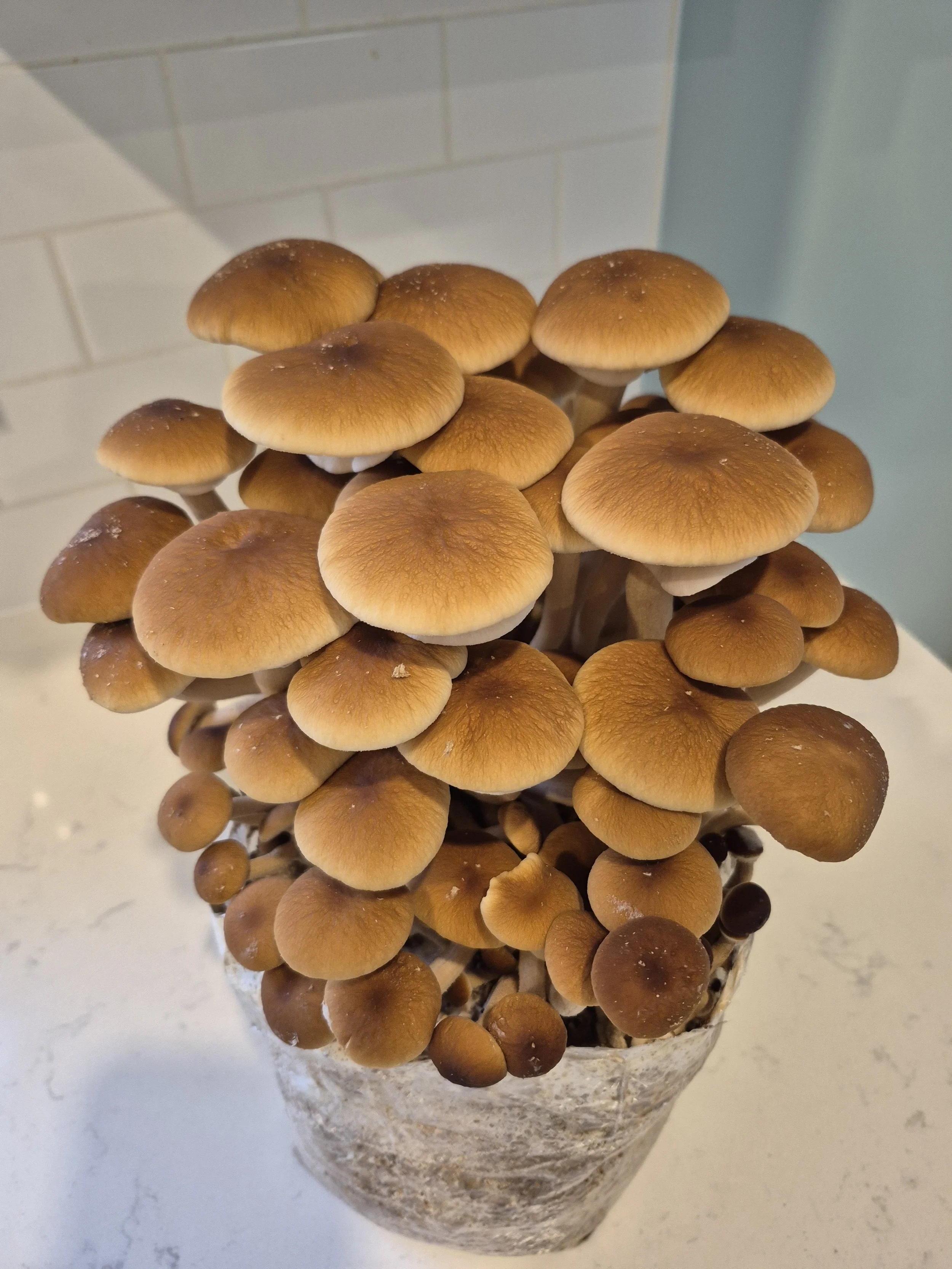
A healthy flush of pioppino mushrooms growing from a fruiting block just before harvest.
A flush is a crop of mushrooms that grows from a fruiting block over a relatively short period of time. Rather than producing mushrooms continuously, most cultivated mushrooms grow in waves. Each wave of growth is called a flush.
Many mushroom species are capable of producing multiple flushes before the fruiting block has used up all of its nutrients.
Why Do Mushrooms Grow in Flushes?
As the mycelium grows through the substrate, it stores energy and nutrients. When growing conditions are right, the mycelium uses that energy to produce a crop of mushrooms.
After the mushrooms are harvested, the mycelium enters a resting period before building up enough energy to produce another flush.
This cycle can repeat several times until the fruiting block is eventually exhausted.
Are All Flushes the Same?
Not always. The first flush is often the largest and most productive, although this can vary depending on the mushroom species and growing conditions.
Later flushes may produce fewer mushrooms or smaller harvests, but they can still provide excellent quality.
How Many Flushes Can a Fruiting Block Produce?
The number of flushes depends on the mushroom species, the quality of the substrate, and the growing conditions. Some fruiting blocks may only produce one or two flushes, while others can produce several before they stop growing.
Once the nutrients in the substrate have been used up, the fruiting block is considered spent and will no longer produce healthy crops of mushrooms.
Conclusion
A flush is a wave of mushroom growth produced by a fruiting block. Most cultivated mushrooms produce multiple flushes, with resting periods between each one. Understanding what a flush is helps growers know what to expect throughout the growing process and when additional harvests may occur.