What Is Mushroom Colonization?
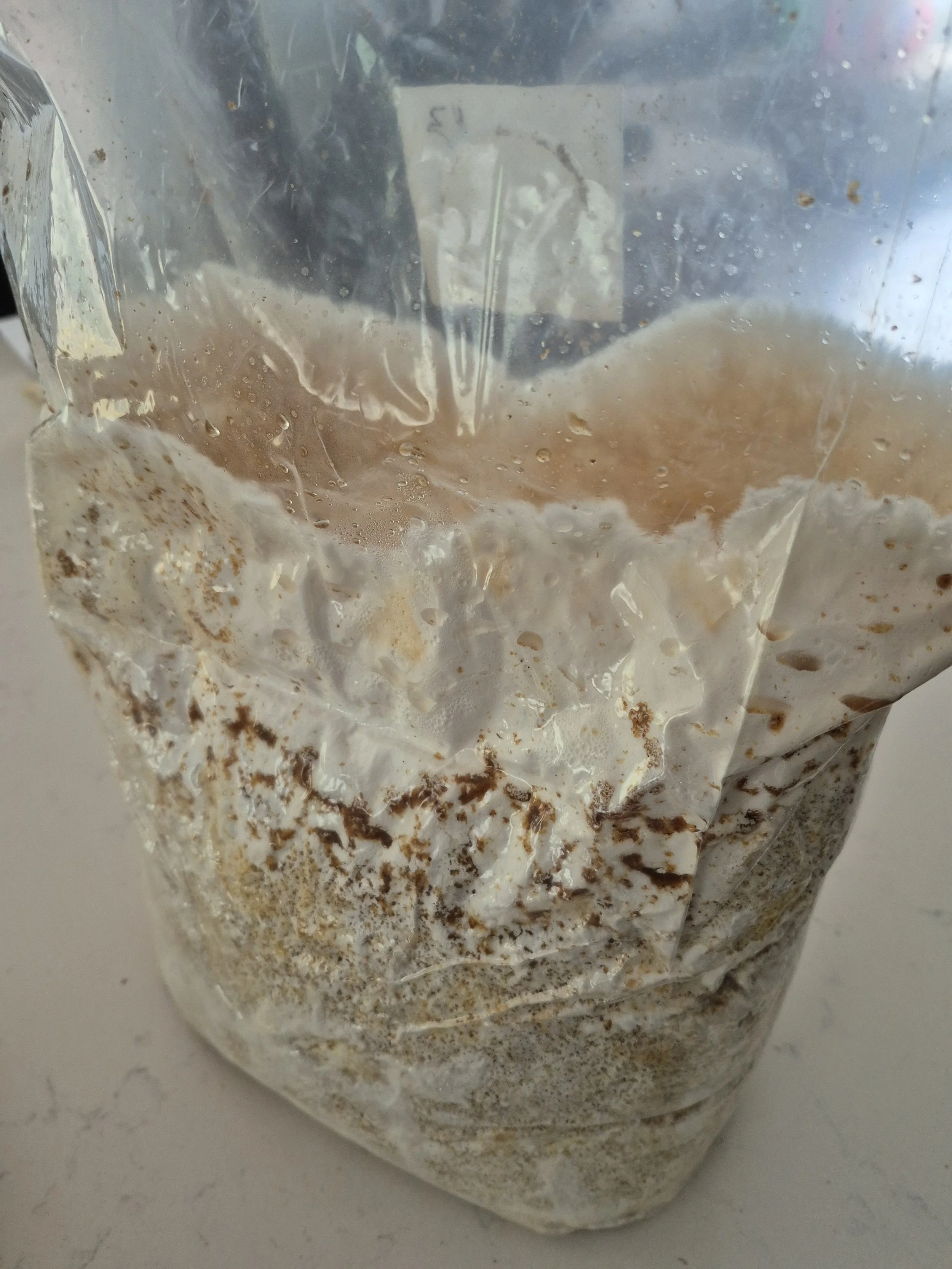
Healthy blue oyster mycelium aggressively colonizing a Master's Mix substrate block. Vigorous mycelial growth may even climb the inside of the filter bag as it continues to colonize.
Mushroom colonization is the process of mycelium growing through a food source and taking it over. Before mushrooms can grow, the mycelium must first spread throughout the substrate or grain and establish itself. This is one of the most important stages of the mushroom growing process.
What Does Colonization Mean?
When mushroom growers say something is "colonized," they mean the mycelium has spread through the material and is using it as a food source.
The mycelium grows in all directions, branching out into thousands of tiny threads. As it grows, it digests nutrients from the substrate and continues expanding until it has covered as much of the available food as possible.
What Does Healthy Colonization Look Like?
Healthy colonization usually begins as bright white mycelium spreading through the grain or substrate. At first, you may only see a few small patches of white. Over time, those patches become larger and eventually connect together until most or all of the material is covered.
As the mycelium matures, its appearance can vary depending on the mushroom species. While many species remain white, others may naturally develop shades of cream, tan, yellow, or light brown. These color changes are often a normal part of healthy growth and are not necessarily a sign that something is wrong.
Different mushroom species also colonize at different speeds, but healthy mycelium should continue expanding over time.
Why Is Colonization Important?
Colonization allows the mycelium to build a strong network before it begins producing mushrooms.
A fully colonized substrate contains much more established mycelium than a partially colonized one. This gives the mushroom culture a better chance of producing healthy mushrooms and helps it compete against unwanted contaminants.
Trying to fruit a block before it has fully colonized usually leads to poor results.
What Affects Colonization Speed?
• Temperature
• The mushroom species being grown
• Moisture content
• Nutrient availability
• The amount of healthy spawn used during inoculation
When these conditions are suitable, the mycelium can colonize much more quickly.
When Is Colonization Finished?
Colonization is generally considered complete when the grain or substrate is covered with healthy mycelium and there are few or no uncolonized areas remaining.
Depending on the mushroom species, many growers will allow the block to rest for a short period after it appears fully colonized. This gives the mycelium time to finish establishing itself before fruiting conditions are introduced.
However, timing is important. Leaving a block for too long after it has fully colonized may cause some species to begin forming pins or mushrooms inside the bag. Introducing fruiting conditions at the appropriate time generally produces the best results.
Conclusion
Mushroom colonization is the stage where mycelium spreads through grain or substrate, consumes available nutrients, and establishes itself before producing mushrooms. A healthy, fully colonized block provides the strong foundation needed for successful fruiting. Understanding when colonization is complete and introducing fruiting conditions at the right time are two of the most important skills for successful mushroom cultivation.